
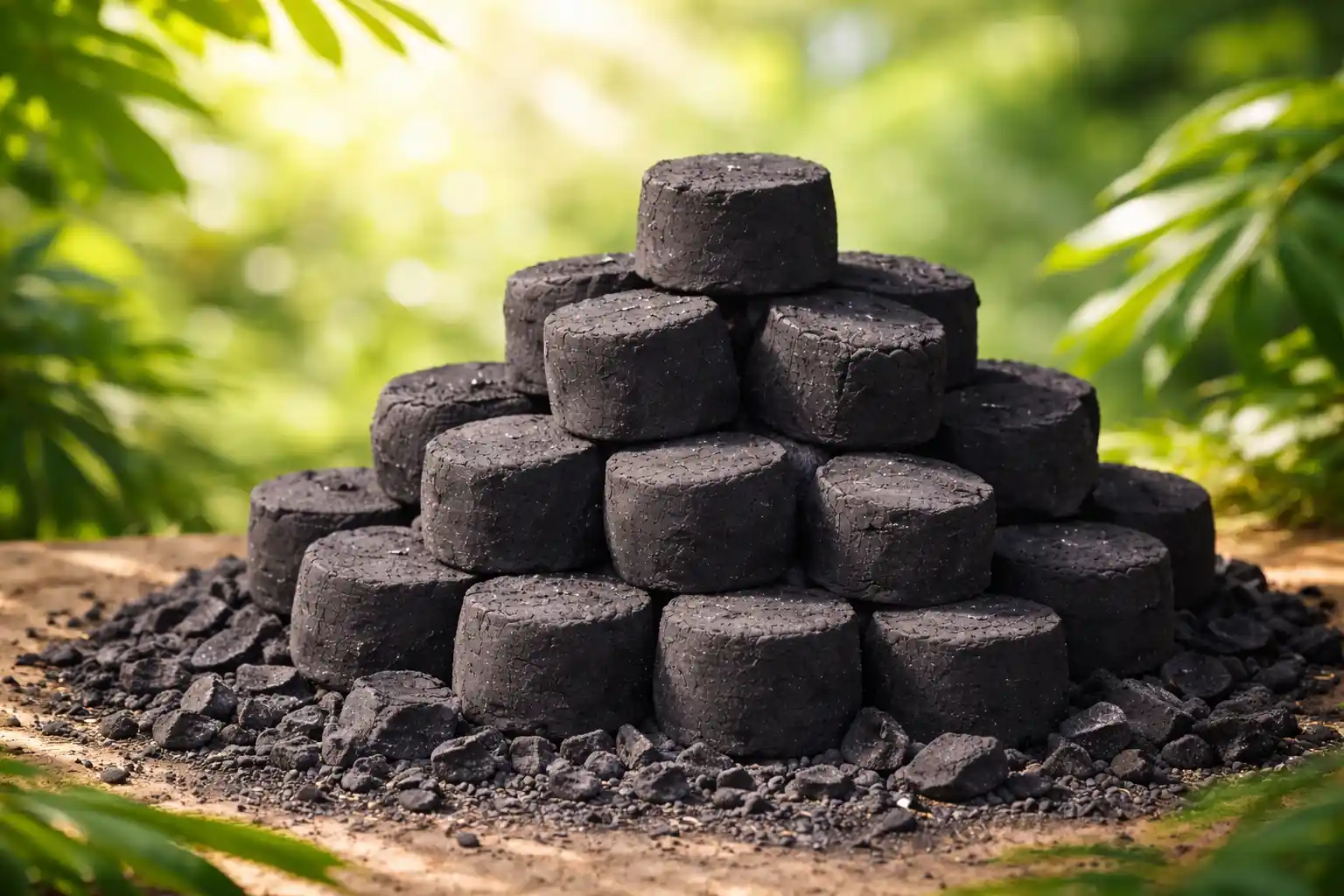
Understanding the coconut shell briquette mixture composition for strong and durable briquettes is important for producers who want consistent performance and reliable product quality. For a more detailed explanation of formulation techniques and production considerations, readers can refer to the main article, Ideal Coconut Shell Briquette Mixture Composition for Maximum Results, which outlines key mixture standards. Additional insights on digital industry development, production strategies, and resource management are also available on the homepage of numediaagency.com, providing useful references for businesses and small-scale manufacturers.
Coconut shell briquettes are widely recognized for their strong structure, long burning time, and stable heat output. Achieving these qualities depends heavily on the right mixture composition. A balanced combination of raw materials, binders, and moisture levels helps create briquettes that are durable during handling and efficient during combustion.
Role of Coconut Shell Charcoal Powder
The main component in the mixture is coconut shell charcoal powder. This material provides the primary fuel value and determines burning performance. Fine and uniform charcoal particles improve briquette density and structural strength. High-quality charcoal powder also reduces impurities, supporting cleaner combustion and lower ash production.
Importance of Particle Size Consistency
Uniform particle size plays a major role in creating durable briquettes. When particles are too large, the briquette structure becomes weak and may crack easily. Proper grinding and sieving help produce even particles that bond more effectively during pressing, resulting in stronger and more compact briquettes.
Binder Composition and Function
Binders hold charcoal particles together and help maintain the briquette shape. Natural binders such as starch or tapioca flour are commonly used because they are safe and support efficient burning. The binder must be added in the right proportion. Excess binder can reduce heat output, while insufficient binder may cause the briquettes to break during transport or storage.
Moisture Balance in the Mixture
Water is necessary to combine charcoal powder and binder into a workable mixture. However, moisture must be carefully controlled. Too much water weakens the briquette structure and prolongs drying time, while too little water makes the mixture difficult to shape. A balanced moisture level supports compact molding and stable durability.
Mixing Techniques for Strong Structure
Thorough mixing ensures that all materials distribute evenly. Consistent mixing improves bonding between charcoal particles and binder, creating a uniform texture. This step directly affects the final strength and resistance of briquettes against pressure and handling.
Pressing and Density Considerations
The mixture composition must work well with pressing techniques. Proper pressure increases density and improves durability. Dense briquettes burn longer and maintain consistent heat. A balanced mixture allows the briquettes to retain shape without becoming too brittle.
Drying and Final Strength
After molding, drying stabilizes the mixture and strengthens the briquettes. Removing excess moisture prevents cracks and improves durability. Properly dried briquettes become harder, more compact, and ready for storage or transportation.
Practical Benefits of the Right Composition
Using the correct mixture composition helps producers create briquettes that meet market expectations. Strong and durable briquettes reduce product damage, improve burning performance, and increase customer satisfaction. This also supports efficiency in packaging, shipping, and long-term storage.
Conclusion
The coconut shell briquette mixture composition for strong and durable briquettes depends on balanced charcoal powder, binder proportion, particle size consistency, and controlled moisture levels. Proper mixing, pressing, and drying further strengthen the final product. With the right formulation, producers can create briquettes that are durable, efficient, and suitable for household use, restaurants, and export markets.
