
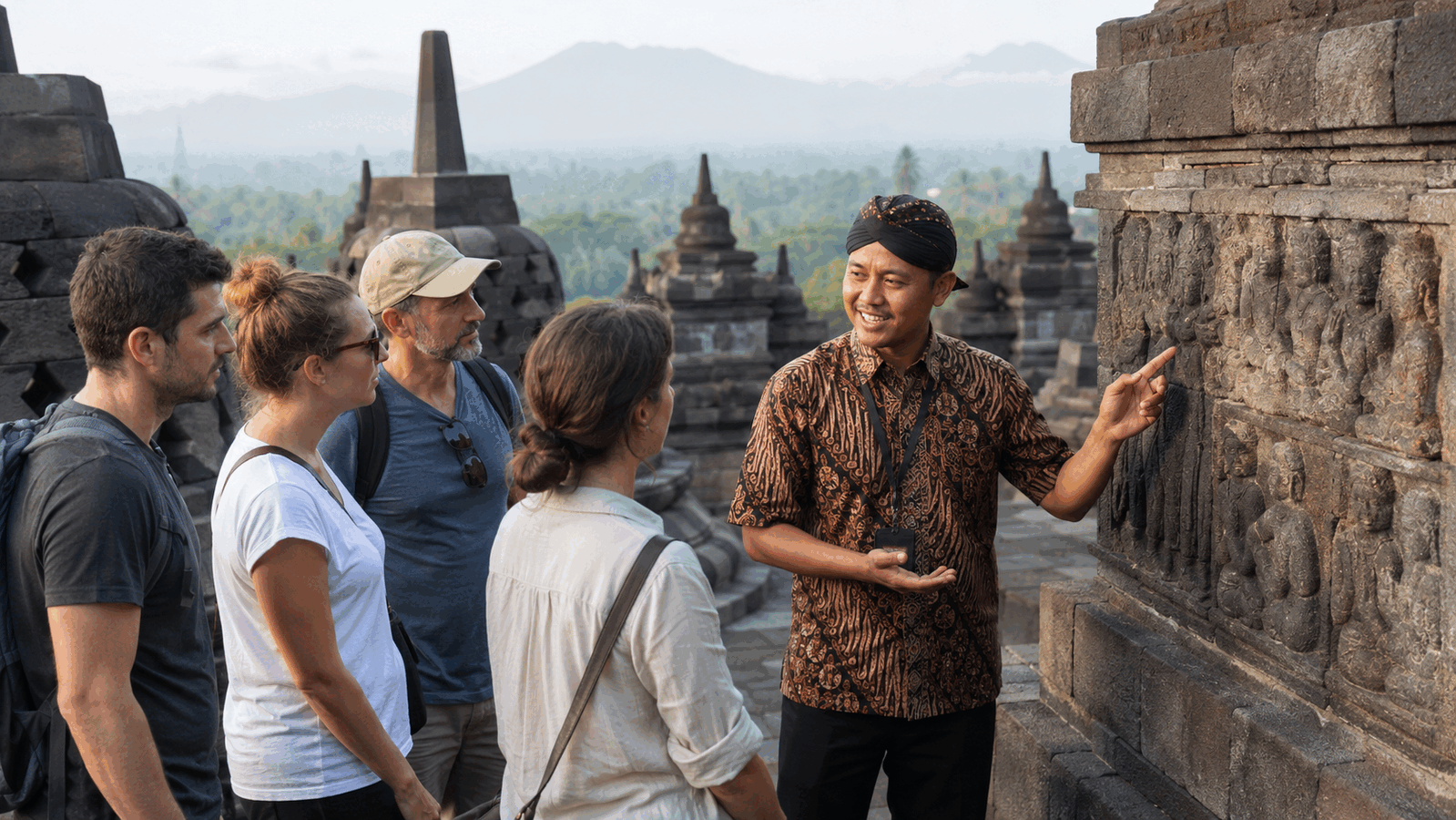
A Borobudur Tour With Local Guide offers more than a simple visit to an ancient monument. Your guide can explain the temple’s history, architecture, reliefs, and spiritual meaning. Therefore, you can understand the stories behind the impressive stone structure.
This experience suits solo travelers, couples, families, students, and small groups. Moreover, a local guide can adjust the explanation to match your interests and available time.
Meet Your Local Guide
First, meet your guide at the agreed location near the temple entrance. The guide will explain the visiting route, current regulations, and important areas within the complex.
A local guide understands the temple and its surrounding communities. Therefore, you can ask questions about Buddhist traditions, ancient Javanese culture, and modern village life. The guide may also share local stories that general travel information does not cover.
Before starting, tell your guide about your interests. For example, you may want to focus on history, architecture, photography, spirituality, or archaeology. This information helps the guide create a more personal experience.
Explore Borobudur Temple
Borobudur consists of several levels with detailed relief panels, Buddha statues, and bell-shaped stupas. Each section represents part of the Buddhist journey toward enlightenment.
Your guide can explain how the temple’s design connects with Buddhist philosophy. In addition, the guide can show you important reliefs along the walking route. These carvings illustrate religious teachings, daily activities, ships, plants, animals, and life in ancient Java.
Without an explanation, many reliefs may appear like ordinary stone decorations. However, a knowledgeable guide can reveal the meaning behind each scene. As a result, your visit becomes more informative and memorable.
Understand the Temple Access Options
Borobudur usually offers different ticket categories. A courtyard ticket provides access to the surrounding temple grounds. Meanwhile, a structure ticket allows visitors to climb the monument during a scheduled session.
The structure ticket may include special footwear and access under specific visitor regulations. Therefore, confirm your ticket type, entry time, and meeting point before arrival.
Availability may change during holidays or busy travel periods. Booking in advance can help you secure a suitable schedule. Your tour operator can also assist with ticket arrangements and explain the latest visitor requirements.
Visit Nearby Cultural Attractions
You can combine your guided temple visit with other attractions near Borobudur. For example, continue to Pawon Temple and Mendut Temple. These smaller temples offer additional insight into the area’s Buddhist heritage.
Alternatively, visit a traditional village after exploring Borobudur. You can meet artisans who produce pottery, batik, tofu, honey, or local snacks. Some workshops also allow visitors to try a simple craft activity.
A countryside tour provides another interesting option. You can travel through rice fields by bicycle, jeep, or classic Volkswagen. Consequently, the complete journey can combine history, culture, scenery, and community interaction.
Choose the Right Guided Tour Package
Before booking, review everything included in the package. Check whether the price covers hotel pickup, private transportation, entrance tickets, parking, and local guide services. Also, confirm the tour duration, vehicle type, and cancellation policy.
Ask whether the guide will accompany you only inside Borobudur or throughout the entire itinerary. This detail can affect the experience and total cost.
Borobudur Tours offers flexible private journeys around Borobudur and Yogyakarta. The team can help arrange transportation, temple tickets, local guides, and additional cultural activities based on your travel plans.
Finally, wear comfortable walking shoes and light clothing. Bring water, sunscreen, sunglasses, a hat, and a camera. Always follow temple rules and respect sacred areas.
Overall, a Borobudur Tour With Local Guide helps you see more than beautiful architecture. It brings ancient carvings, spiritual ideas, and local history to life through clear and engaging explanations.
